Talent pipeline CRM

The talent CRM built into your ATS

Stop choosing between candidate-centric recruitment and a job-centric ATS. Build relationships in your talent pipeline, then push the right candidates into roles when they open. One system, one candidate profile, and no bolt-on CRM required.


pinpoint ats ui example of talent pipeline crm in the platform to help make hiring easier

Candidate-centric recruitment that connects to every job

Most ATSs treat candidates as job applicants. Pinpoint's talent CRM treats them as people you have an ongoing relationship with, then gives you the tools to act on that relationship when the right role opens.

Other platforms force a choice: manage candidates by job, or bolt on a separate CRM. Pinpoint gives you both. Nurture candidates in your talent pipeline, then move them into active roles when you're ready. The same profile follows them throughout.

pinpoint ats ui example of talent pipeline crm in the platform to help make hiring easier

Every hiring process produces strong candidates who don’t get the offer. With Pinpoint, those candidates stay in your pipeline with full context, including scorecards, interview notes, and tags. When a similar role opens, you can quickly find them using search, filters, and our MCP, before posting externally.

pinpoint ats ui example of talent pipeline crm in the platform to help make hiring easier

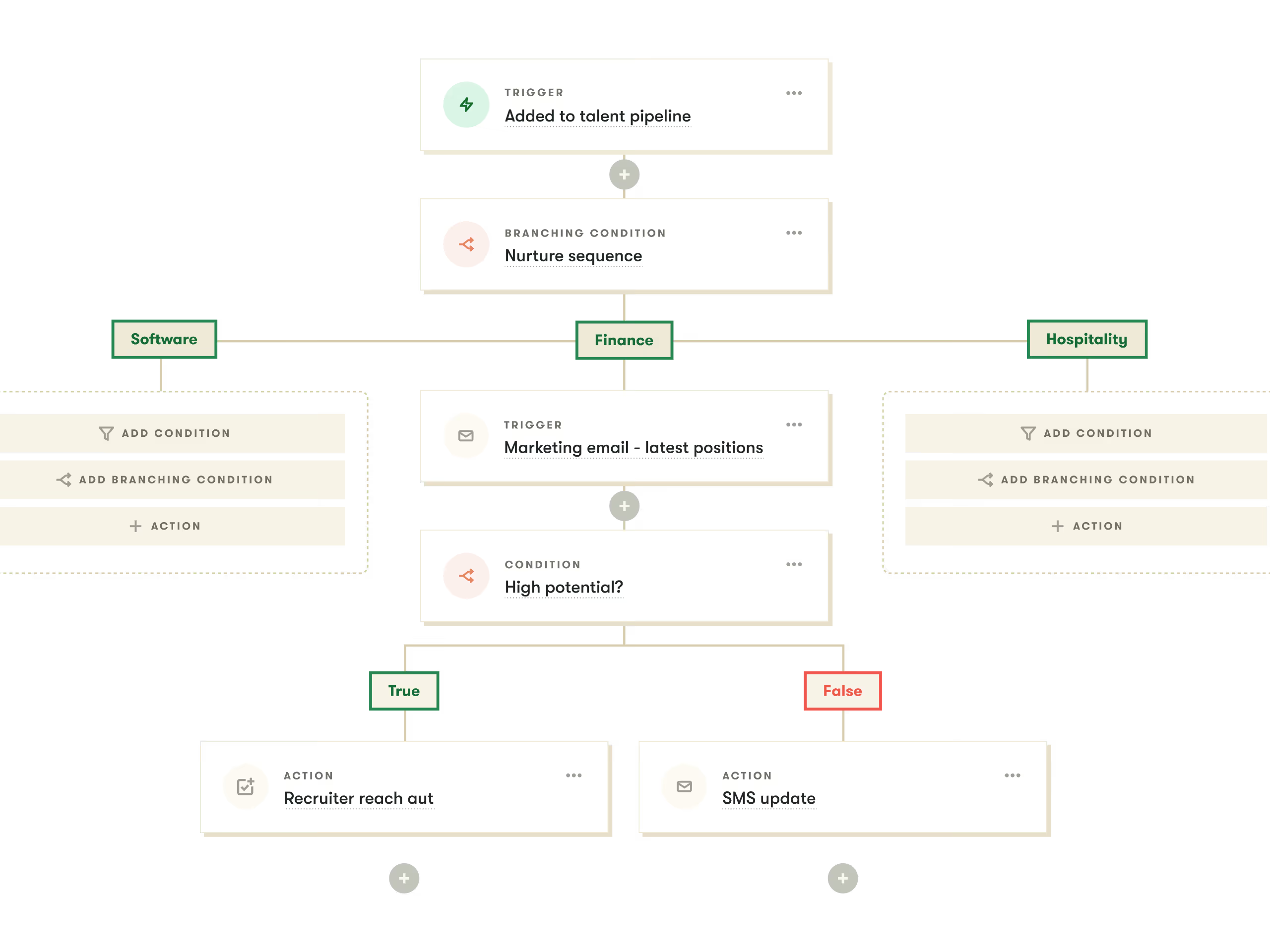
Thousands of applications, hundreds of candidates to keep updated, and a handful of silver medallists you can't afford to lose. Workflow Automation handles the screening, the updates, and the routing. Every candidate gets a response, and your team stays focused on the conversations that matter.

pinpoint ats ui example of talent pipeline crm in the platform to help make hiring easier

Pinpoint's talent CRM lives inside the same platform as your ATS, careers site, and onboarding. One candidate record, one login, one vendor. No syncing data between systems, no paying for a tool your team won't adopt.

pinpoint ats ui example of talent pipeline crm in the platform to help make hiring easier

“Talent Pools has already made a difference. We can see who’s interested, keep them warm, and build smaller, more manageable groups to reach out to when we’re ready to hire.”

Emma Bishop
Resourcing Manager, Blue Cross

Build a talent pipeline that works for you

In Pinpoint,  your pipeline stays fresh, your candidates stay engaged, and your team stays focused on the hires that matter.

Dynamic talent pools

Create pools that populate automatically using conditions like skills, tags, location, department, or application responses. When candidates match your criteria, they’re added instantly, keeping shared pools current without spreadsheets or manual maintenance.

pinpoint ats ui example of talent pipeline crm in the platform to help make hiring easier
AI skills inference

Pinpoint’s AI analyzes candidate profiles and infers skills based on experience, not just resume keywords. Your team reviews and confirms suggestions, building a richer skills database and candidate matching over time.

pinpoint ats ui example of talent pipeline crm in the platform to help make hiring easier
Automated nurture and notifications

Workflow Automation triggers outreach when candidates enter pools or meet conditions. Use the drag-and-drop builder to create workflows and send targeted job notifications, progression updates, and rejections by department, location, or criteria.

pinpoint ats ui example of talent pipeline crm in the platform to help make hiring easier
Find the right candidates faster
Optional Subtitle

Search your entire pipeline using keyword search, advanced boolean search, skills, tags, locations, and departments. Radius search helps you find candidates within commuting distance, so recruiters surface qualified people quickly when new roles open.

pinpoint ats ui example of talent pipeline crm in the platform to help make hiring easier
One candidate, one profile
Optional Subtitle

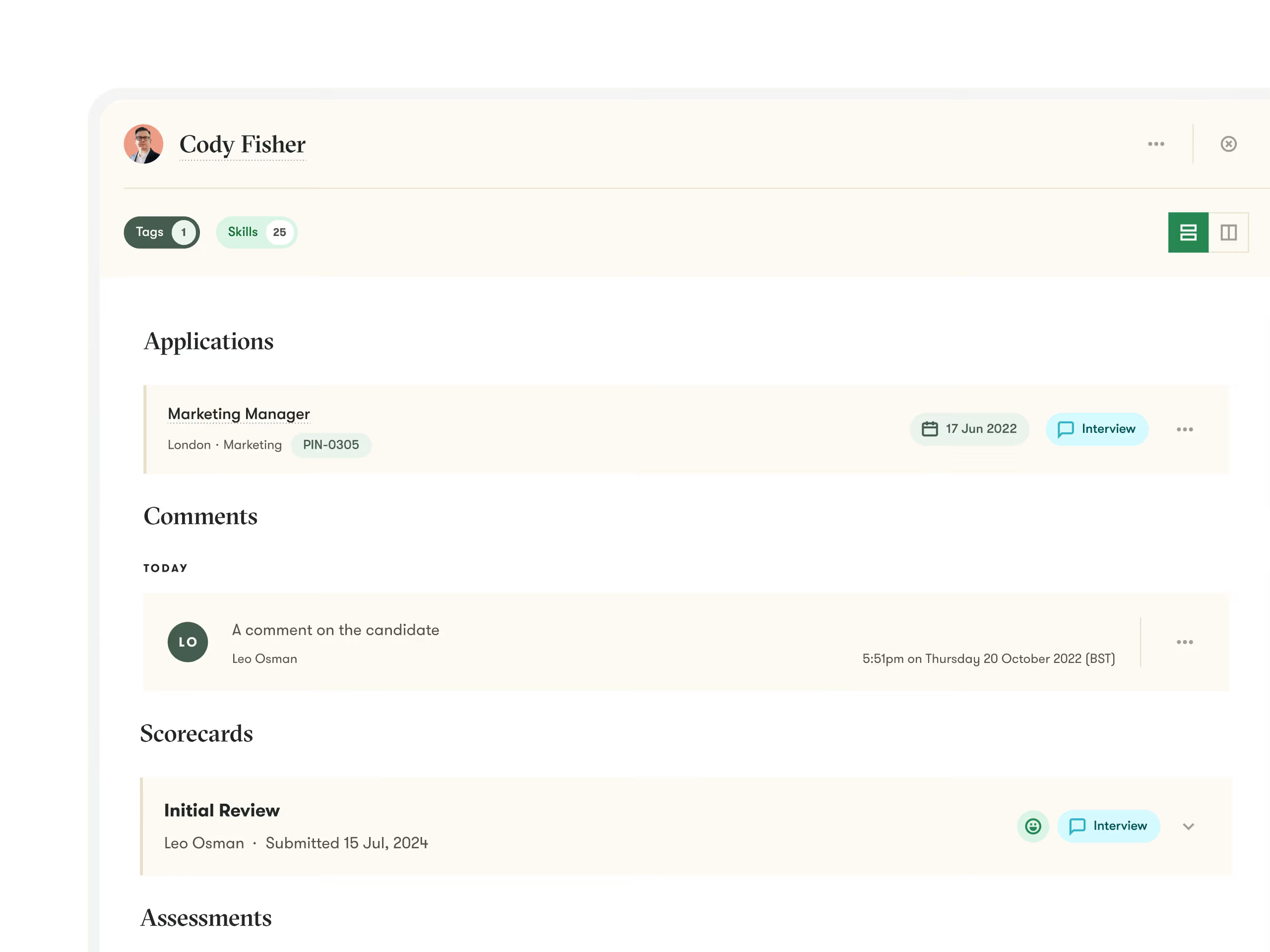
Every candidate has one profile across your pipeline and hiring workflows. Notes, scorecards, tags, and comments stay with them, so when candidates move between roles and pipeline, your team always sees the full context.

pinpoint ats ui example of talent pipeline crm in the platform to help make hiring easier
Chosen by leading talent acquisition and HR teams
Hospitality

65%  

reduction in time to hire

Streamlined

casting day coordination

Increased

candidate communication

“With these new tools, we’ve set a good foundation to scale our hiring while maintaining our culture and delivering a really great candidate and employee experience.”
Michael Easton
Head of Employee Value Proposition, citizenM
Nonprofit

Strengthened

candidate engagement

Increased

candidate trust

Reduced

reliance on paid ads

“Pinpoint has completely changed how we work. We're more efficient, more consistent, and better equipped to give every candidate a great experience.”
Emma Bishop
Resourcing Manager, Blue Cross
Professional Services

Lower

risk of candidates stalling

Improved

visibility for TA leaders and stakeholders

3,500

employees supported in the states

“I just love that I can manage everything and every role in one place without having to jump between systems.”
Liz Mellor
Head of Talent Acquisition for North America, Davies Group
Retail

Centralized

visibility on all candidates

100+

locations supported

Strengthened

hiring manager adoption

“It’s been really lovely using Pinpoint to align things a bit more. Across the board now, all of our candidates are getting a more similar experience, and the communication they’re getting is much stronger.”
Adam Barnes
UK&I Retailer, Lush

Manage every hiring stream in one place

Support multiple roles, teams, and workflows in one platform, with the clarity and consistency your team needs.
G2
4.8
Capterra
4.8
SSR
4.8

Talent CRM FAQs

A talent CRM (candidate relationship management) is a system for building and maintaining relationships with candidates outside of active job processes. Instead of only tracking candidates when they apply for a specific role, a talent CRM lets you capture, organize, and nurture candidates over time, so you have a warm pipeline ready when new roles open. The best talent CRMs sit inside your ATS rather than running as a separate tool, which keeps candidate data in one place and means your team actually uses it.

Candidate relationship management is the practice of treating recruitment as an ongoing relationship rather than a series of one-off transactions. It means capturing candidates who express interest (whether through applications, speculative inquiries, or sourcing), keeping them engaged through targeted communication, and surfacing them when a relevant role opens. In Pinpoint, candidate relationship management happens inside the same system your team uses for active hiring, so there's no gap between nurturing a candidate and moving them into a job process.

An ATS manages candidates in the context of a specific job: applications come in, move through stages, and end with a hire or rejection. A talent CRM manages candidates independently of any job, building a pipeline of people you can draw from when roles open. Most platforms force you to choose one approach or bolt on a separate CRM. Pinpoint combines both: candidate-centric pipeline management and job-centric hiring workflows in one system, with a single candidate profile that carries context across both.

Talent pools are groups of candidates organized around shared characteristics, like skills, location, department interest, or previous application history. In Pinpoint, talent pools can be created manually or set up with conditions that automatically add candidates who match your criteria. For example, you could create a pool for candidates with project management skills based in the Northeast, and it would populate itself as matching candidates enter your pipeline. Pools make it fast to find the right people when a role opens.

A talent pipeline is your total pool of candidates who have expressed interest in your organization but aren't currently in an active hiring process. This includes silver medallists from previous roles, speculative applicants, sourced candidates, and anyone who registered interest through your careers site. A healthy talent pipeline reduces your dependence on job boards and agencies by giving you a qualified audience to draw from every time you hire.

It depends on the ATS. Most applicant tracking systems are job-centric: they manage candidates in the context of a specific role and offer limited tools for managing relationships outside of active hiring. Pinpoint is different. Its talent CRM is built into the ATS, giving you candidate-centric pipeline management and job-centric hiring workflows in one platform. You manage relationships in the pipeline, move candidates into jobs when ready, and maintain one profile throughout. No separate contract, no integration, no data syncing.

Pinpoint includes a full talent CRM inside the ATS, with dynamic talent pools, AI skills inference, Boolean and radius search, Workflow Automation, and Talent Pipeline Refresh. Other platforms in the mid-market either lack CRM functionality entirely, offer basic talent pooling without automation, or require a separate product at additional cost. Pinpoint is purpose-built for teams that want candidate relationship management and applicant tracking in one system.

The best talent CRM for your team depends on your size, hiring volume, and tech stack. For in-house TA teams of 5 to 50, Pinpoint's built-in talent CRM offers the strongest combination of pipeline management, automation, and ease of use without requiring a separate product. It's designed for teams that want to build a proactive recruitment function inside their existing ATS, not teams that want to manage yet another disconnected tool.

Look for a talent CRM that lives inside your ATS rather than alongside it. Key capabilities to evaluate: dynamic talent pools with conditions-based automation, skills-based search (including radius search for location-sensitive roles), automated nurture scoped to relevant candidates, data freshness management, consent and retention controls for compliance, and a single candidate profile that carries history from pipeline to job process and back. Avoid platforms that require a separate product or contract for CRM functionality.

A sourcing tool helps you find new candidates externally, typically through job board databases, LinkedIn, or AI-powered discovery. A talent CRM manages the candidates you've already found: past applicants, silver medallists, speculative applicants, and sourced candidates who've entered your pipeline. The two are complementary. Sourcing fills the top of the funnel; a talent CRM makes sure those candidates don't disappear after their first interaction with your organization.