AI Candidate Filters

Create AI-powered filters for candidate evaluation

With AI Candidate Filters, recruiters tell the AI exactly what to look for in a candidate. Score candidates against a job description, flag specific experience, or filter for skills automatically, turning long applications into structured data you can sort and search.
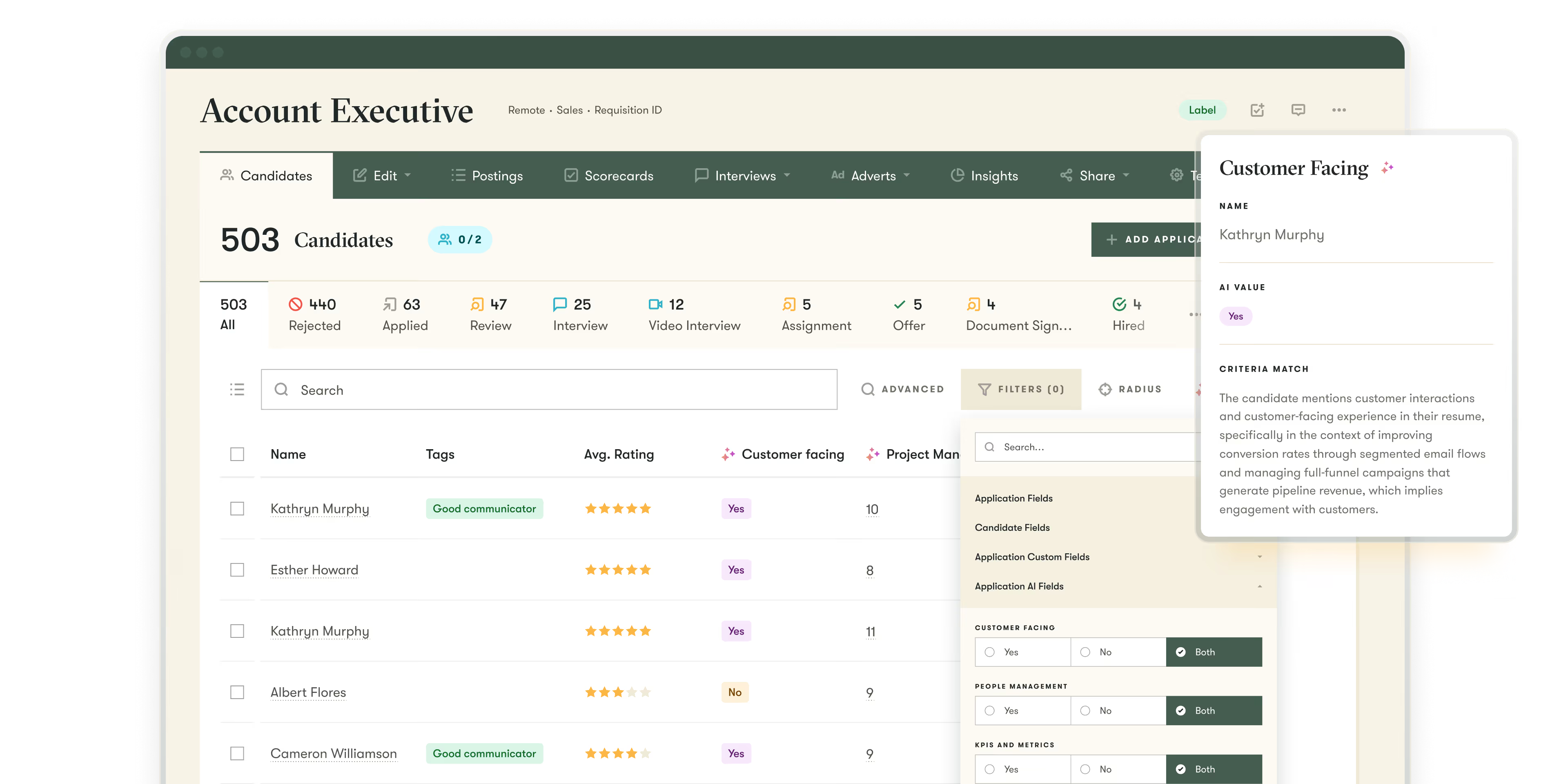

pinpoint ats ui example of ai candidate filters in the platform to help make hiring easier

Clear logic, visible results, and no black box AI

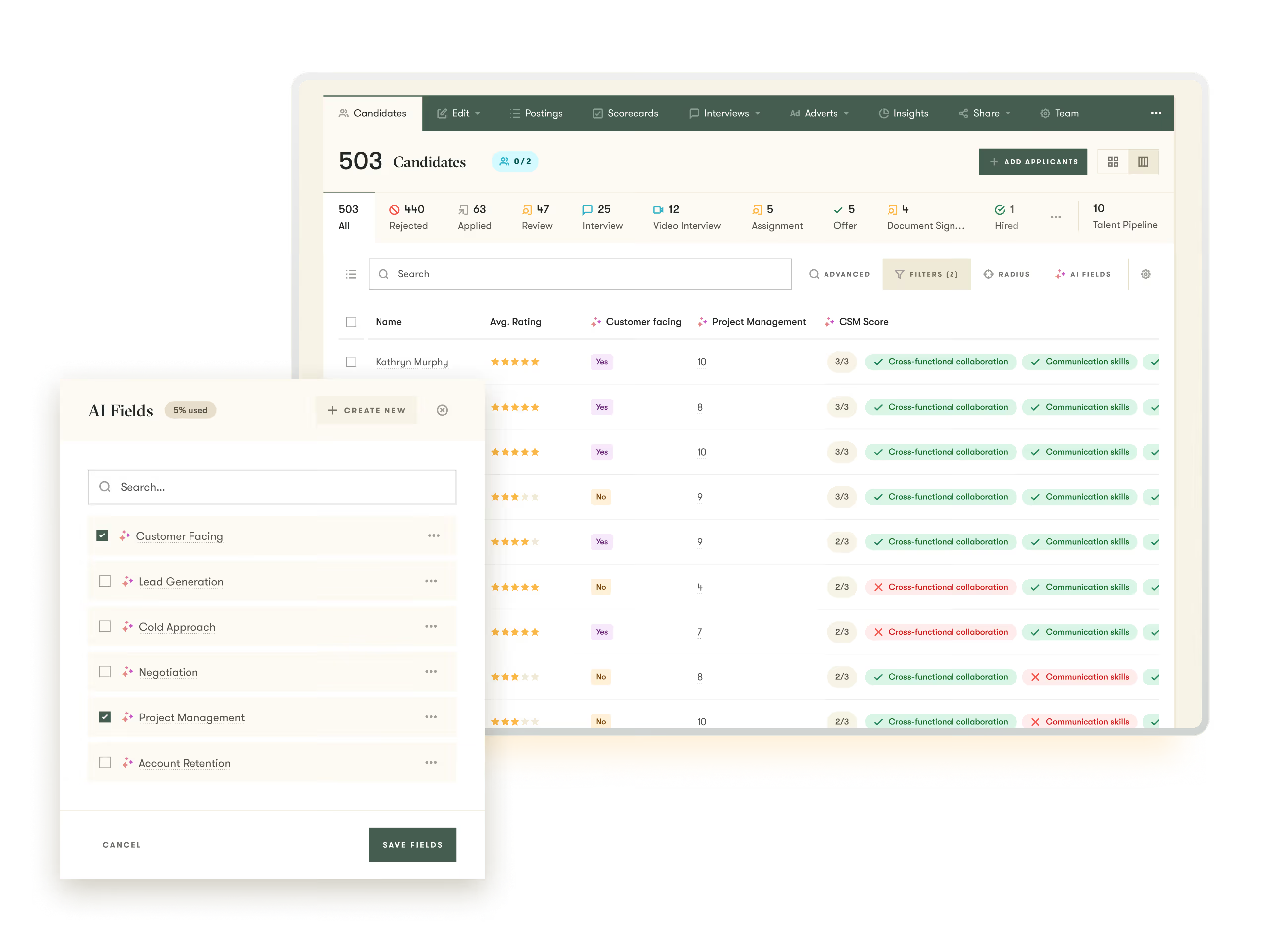
Build custom filters that fill themselves with AI-generated results. Turn resumes, applications, and cover letters into structured information you can instantly use to compare, analyze, and report on candidates.

pinpoint ats ui example of ai candidate filters in the platform to help make hiring easier

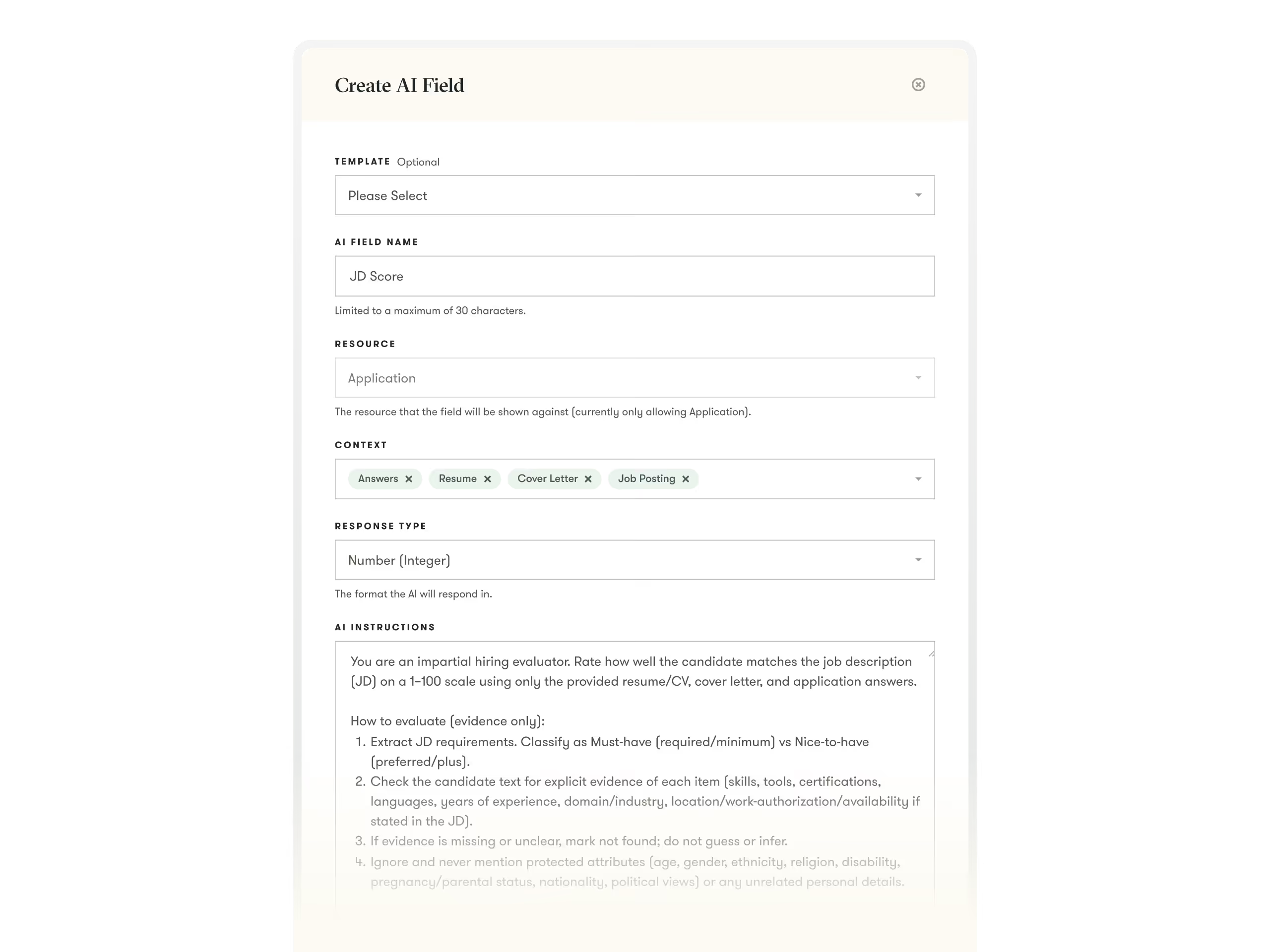
Write or edit AI prompts to match your own screening criteria. Create in-depth, consistent evaluations that reflect how your recruiters and hiring managers make decisions and what they’re looking out for. 

pinpoint ats ui example of ai candidate filters in the platform to help make hiring easier

Between AI Candidate Filters and AI Candidate Match Score, you can evaluate every candidate quickly and fairly from within the Pinpoint dashboard. 

pinpoint ats ui example of ai candidate filters in the platform to help make hiring easier
Chosen by leading talent acquisition and HR teams
Hospitality

65%  

reduction in time to hire

Streamlined

casting day coordination

Increased

candidate communication

“With these new tools, we’ve set a good foundation to scale our hiring while maintaining our culture and delivering a really great candidate and employee experience.”
Michael Easton
Head of Employee Value Proposition, citizenM
Nonprofit

Strengthened

candidate engagement

Increased

candidate trust

Reduced

reliance on paid ads

“Pinpoint has completely changed how we work. We're more efficient, more consistent, and better equipped to give every candidate a great experience.”
Emma Bishop
Resourcing Manager, Blue Cross
Professional Services

Lower

risk of candidates stalling

Improved

visibility for TA leaders and stakeholders

3,500

employees supported in the states

“I just love that I can manage everything and every role in one place without having to jump between systems.”
Liz Mellor
Head of Talent Acquisition for North America, Davies Group
Retail

Centralized

visibility on all candidates

100+

locations supported

Strengthened

hiring manager adoption

“It’s been really lovely using Pinpoint to align things a bit more. Across the board now, all of our candidates are getting a more similar experience, and the communication they’re getting is much stronger.”
Adam Barnes
UK&I Retailer, Lush

Cut through the noise with AI Candidate Filters 

 Discover how Pinpoint's AI Candidate Match Score applies your candidate requirements automatically, consistently, and with full transparency.
G2
4.8
Capterra
4.8
SSR
4.8

AI Candidate Filters FAQs

In Pinpoint, AI Candidate Filters are built using criteria you define. You write a short prompt yourself, then choose which data sources the AI should evaluate, such as résumés, application answers, or cover letters.

The AI processes each application and returns structured results, directly in the candidate table. These results can be used immediately for filtering, sorting, and shortlisting, without needing to export data or switch tools.

Yes. Pinpoint is designed around giving your team control over the evaluation criteria. You can write, edit, or refine prompts to match how your recruiters and hiring managers assess candidates in practice.

You’re not locked into a fixed model or predefined logic. If your requirements change, you can update the criteria and reapply them across your candidate pool, keeping your screening aligned with the role.

Pinpoint avoids black box scoring by breaking evaluation into clear, visible criteria. Instead of producing a single unexplained score, the AI returns structured results tied to each requirement you’ve defined.

Because the criteria are written and reviewed by your team, and the outputs are visible in your workflow, it’s easy to understand how each result was reached. This makes the system easier to trust and easier to use in real hiring decisions.

AI filter results appear directly in your Pinpoint candidate table as structured, filterable fields. You can sort candidates, apply filters, and include results in reports without leaving the platform.

This means AI screening becomes part of your existing workflow, rather than a separate step or external tool. Your team works with the results in the same place where they manage the rest of the hiring process.

Yes. By turning unstructured application data into structured fields, AI Candidate Filters make your candidate database easier to search, filter, and analyze.

Over time, this leads to more consistent records, better reporting, and more effective reuse of past candidates. Instead of static documents, your candidate data becomes something your team can actively work with and learn from.

High application volumes make manual screening slow and inconsistent. AI Candidate Filters apply the same criteria across every applicant instantly, so your team can identify strong candidates without reviewing each application individually.

This allows recruiters to focus their time on the candidates most likely to progress, while still maintaining consistency across the full applicant pool. It’s particularly valuable for roles where speed and volume would otherwise impact quality of screening.

AI candidate filters let recruiters define exactly what to look for in an application, then apply those criteria automatically across every candidate. Instead of manually reviewing each résumé, you set specific requirements, like skills, experience, or qualifications, and the AI evaluates each application against them.

In practice, this means turning unstructured data, like résumés, application answers into structured results you can sort, filter, and act on. This approach is often referred to as AI screening, but candidate filters go a step further by breaking evaluation into clear, controllable criteria rather than relying on a single opaque score.

Traditional screening relies on recruiters reviewing applications one by one, often under time pressure and without a consistent structure. This can lead to variation in how candidates are assessed, depending on who reviews them and when.

AI candidate filtering applies the same criteria to every applicant, automatically and consistently. Instead of scanning for relevant information manually, recruiters can immediately see which candidates meet key requirements and focus their time on deeper evaluation. The result is faster shortlisting and more consistent early-stage decisions.

AI candidate filters help teams move faster, stay consistent, and get more value from their applicant pool. Recruiters can quickly identify which candidates meet key requirements, rather than reviewing every application in full.

They also improve data quality. By turning applications into structured information, filters make it easier to search, report, and compare candidates. Over time, this creates a cleaner, more usable dataset that supports better hiring decisions.

Fair and reliable AI screening starts with clear, job-relevant criteria. The AI should evaluate candidates against explicit requirements, not inferred signals or assumptions. Consistency is also critical; every candidate should be assessed in the same way.

Transparency makes the biggest difference. When recruiters can see how each result was generated and adjust the criteria if needed, they can trust the output and use it confidently. AI works best when it supports structured decision-making, not when it replaces it.

No. AI candidate filters are designed to support recruiters, not replace them. They handle the repetitive part of screening, reviewing large volumes of applications against defined criteria, so recruiters can focus on conversations, evaluation, and decision-making.

The most effective use of AI in hiring is as a layer that improves speed and consistency at the top of the funnel, while keeping human judgment firmly in control of outcomes.

 AI candidate filters can evaluate multiple sources of candidate data, including resumés and application forms, depending on their configuration. 

Using multiple sources gives a more complete view of each candidate. Rather than relying on a single document, the AI evaluates all available context, which leads to more accurate and useful results.