


AI Candidate Match Score
Transparent AI scoring with human control
AI Candidate Match Score helps hiring teams consistently score and prioritize candidates against the job requirements, so they can focus on the strongest candidates first.
AI Candidate Match Score helps hiring teams consistently score and prioritize candidates against the job requirements, so they can focus on the strongest candidates first.


High application volumes make early screening inconsistent by default. AI Candidate Match Score gives your team a clear, repeatable way to prioritize best-fit candidates from the start.
Pinpoint AI suggests match criteria based on your job description, turning requirements into clear signals you can use to assess candidates. Your team starts with a structured definition of what to look for, without building it from scratch.

Review, edit, or refine the criteria before candidates are scored, so it reflects what actually matters for the role. You stay in control of the inputs, not locked into a fixed model.
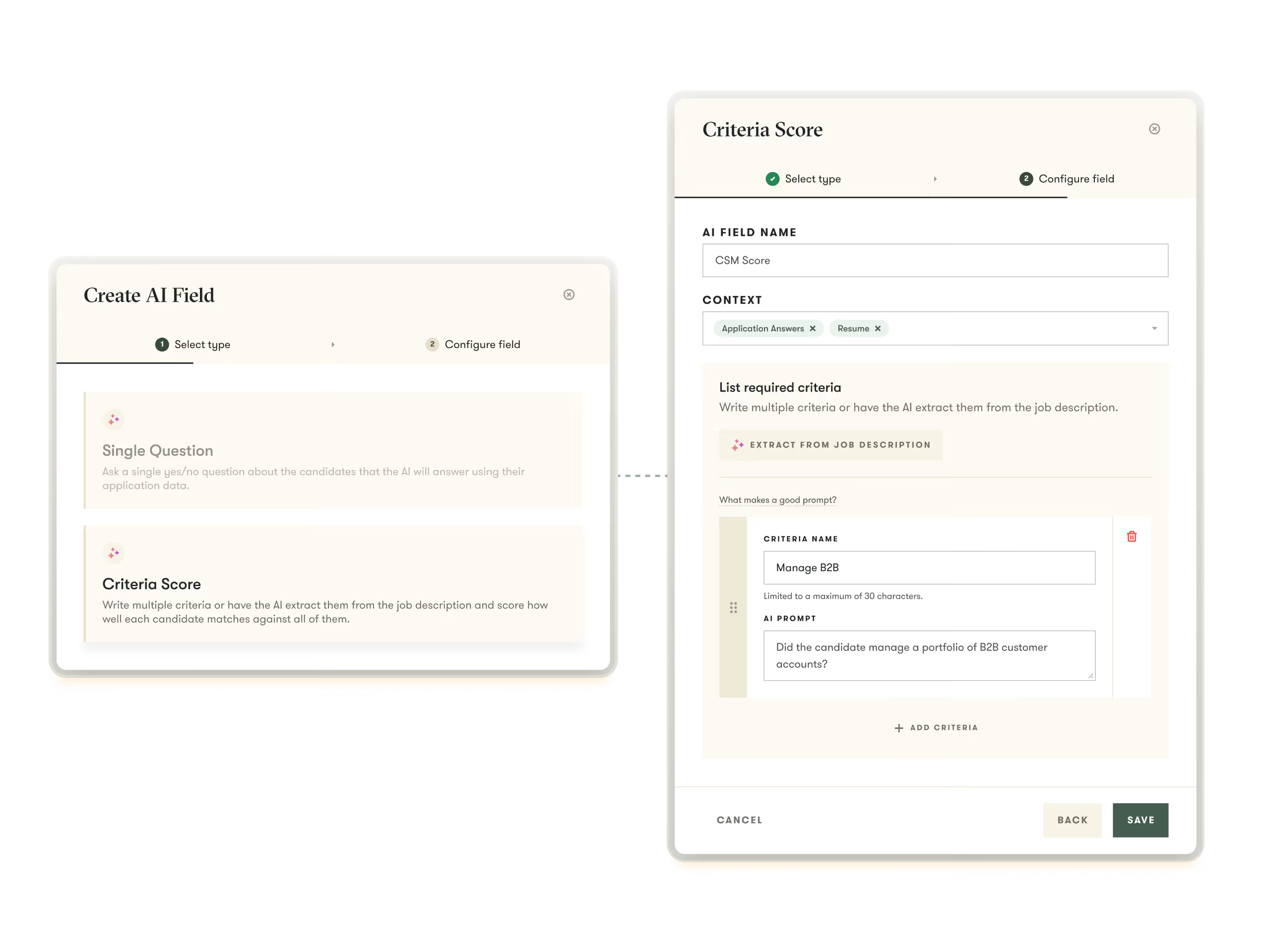
Every candidate is assessed against the same criteria, giving you a fair, repeatable way to compare applicants and prioritize your shortlist.
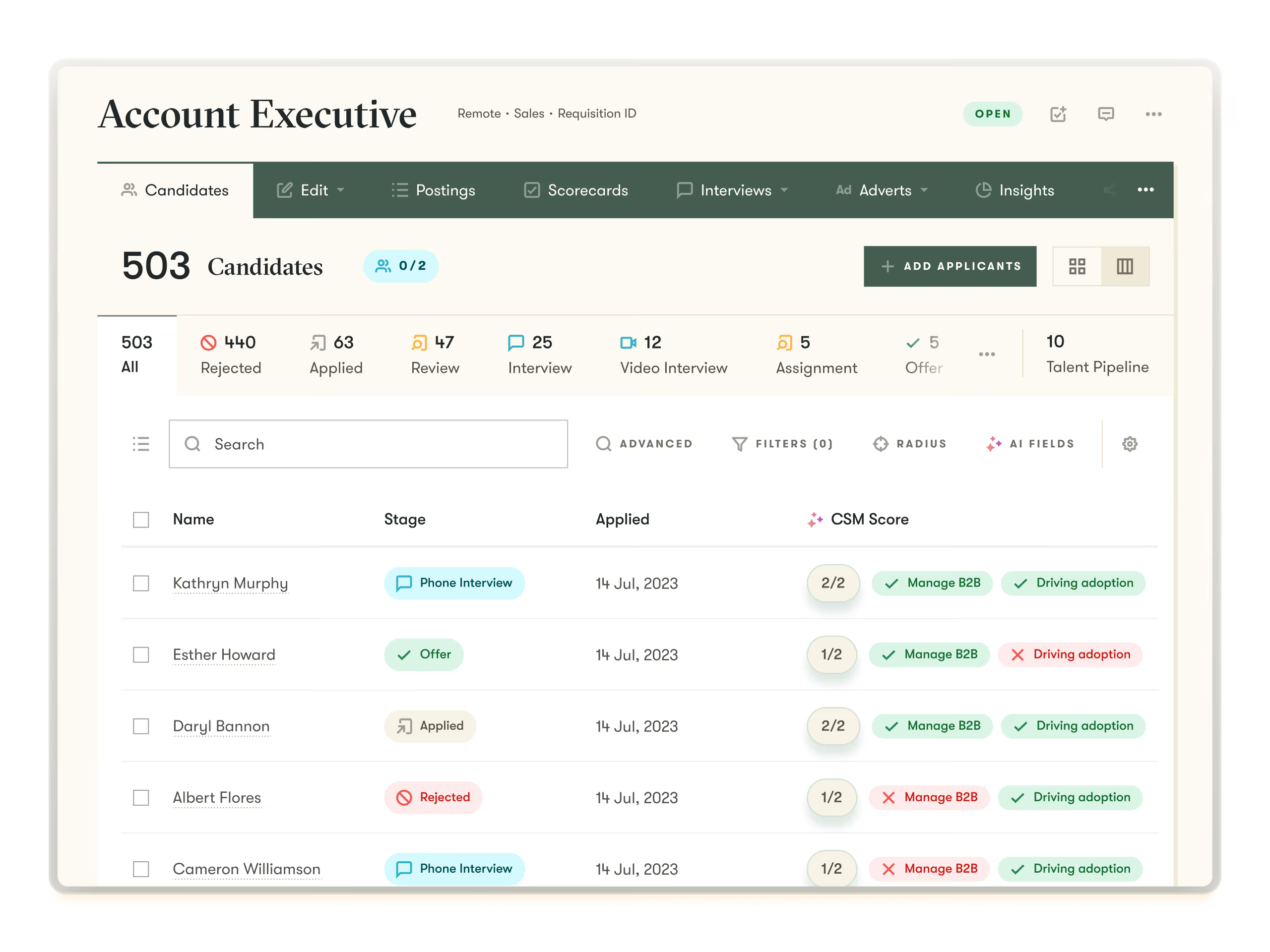
Use a clear overall score to sort and prioritize candidates. It’s easy to see who to review first, without digging through every application manually.

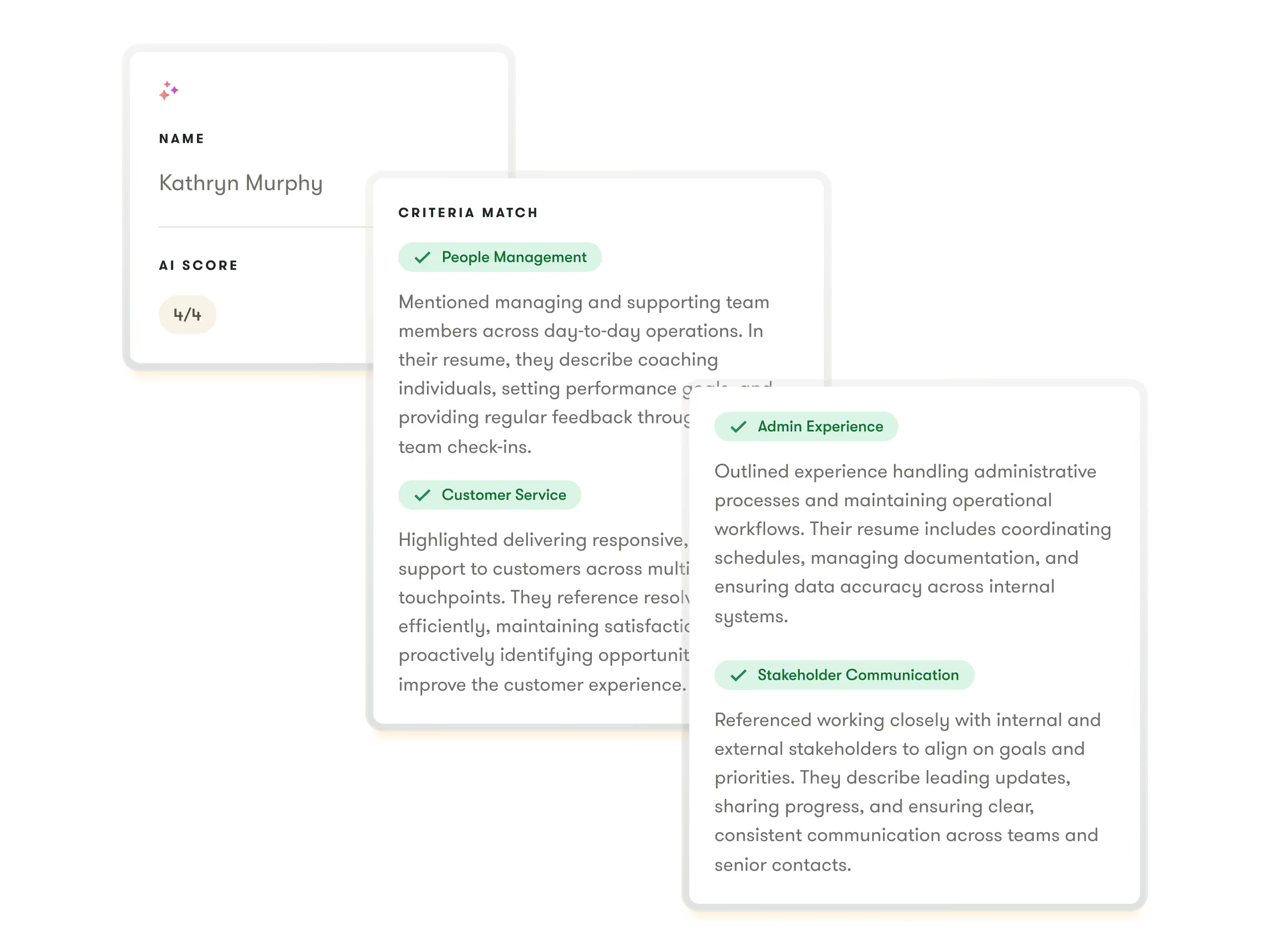
See exactly why candidates scored the way they did, with full visibility into how each criterion was applied. Your team can understand and trust the outcome without second-guessing it.
















































reduction in time to hire
casting day coordination
candidate communication

candidate engagement
candidate trust
reliance on paid ads

risk of candidates stalling
visibility for TA leaders and stakeholders
employees supported in the states

visibility on all candidates
locations supported
hiring manager adoption
An AI candidate match score is a structured way to measure how well a candidate meets the requirements of a specific role. In Pinpoint, the score is based on a set of clearly defined criteria, such as “people management experience” or “B2B SaaS experience.” Each candidate is assessed against those criteria and given a score based on how many they meet.
The score is not designed to replace recruiter judgment. Instead, it acts as a starting point for review, especially when application volumes are high. Recruiters can quickly see which candidates meet the core requirements and focus their time on the most relevant applications first, without having to read every resumé in full.
In Pinpoint, AI candidate matching starts with defining what “good” looks like for the role. The platform suggests criteria based on the job description, or recruiters can write and refine them manually. These criteria are typically simple, role-specific signals that reflect how screening decisions are actually made.
Once the criteria are set, the AI evaluates each candidate’s application, resume, and any additional answers against them. The result is a score showing how many criteria were met, along with a breakdown explaining each score. This makes it easy to understand how the score was reached and to adjust criteria if needed.
Good criteria are specific, relevant to the role, and easy to evaluate consistently. Instead of vague signals like “strong communication skills,” effective criteria focus on observable experience, such as “has managed stakeholder relationships” or “has used Salesforce.”
In Pinpoint, criteria can be generated from the job description and then refined by the recruiter. This keeps the process grounded in the actual requirements of the role, rather than relying on a generic or pre-trained model.
Accuracy depends on two things: the quality of the criteria and the quality of the candidate data. When criteria are clearly defined and aligned to the role, the AI can reliably identify whether those signals are present in a candidate’s application.
Pinpoint supports this by showing a breakdown for every score, so recruiters can see exactly what was matched and why. If something is missed or misinterpreted, the criteria can be adjusted. This feedback loop helps improve accuracy over time and keeps recruiters in control of the process.
AI candidate matching is best used to support, not replace, manual screening. It helps teams prioritize which candidates to review first, but it doesn’t make final hiring decisions.
In practice, it reduces the time spent scanning applications and brings consistency to early-stage screening. Recruiters still review candidates, interpret context, and make decisions, but they start from a more structured and informed position rather than working through applications sequentially.
When application volumes are high, recruiters rarely review every candidate under the same conditions. Timing, fatigue, and workload all influence who gets seen first. This can lead to inconsistent outcomes and missed candidates.
AI candidate scoring addresses this by applying the same criteria to every application, regardless of when it’s reviewed. Instead of working through candidates in order of when they applied, teams can immediately identify which applicants meet the key requirements and focus their attention there. This makes early-stage screening more consistent and scalable.
Keyword filtering relies on exact matches, which can miss relevant candidates if they use different wording or phrasing. It also doesn’t provide any explanation beyond whether a keyword was found.
AI candidate matching evaluates meaning and context, not just keywords. It looks at whether a candidate meets a defined criterion, even if the wording varies. In Pinpoint, this is combined with a clear explanation for each result, so recruiters can see why a candidate was or wasn’t considered a match.
AI candidate scoring is most useful at the top of the funnel, during initial screening. This is where application volumes are highest and where inconsistency is most likely to affect outcomes.
By providing a structured way to assess every candidate against the same criteria, it helps teams prioritize effectively before moving into deeper evaluation stages like interviews and scorecards. It becomes a foundation for the rest of the hiring process, rather than a standalone decision tool.
Transparency in Pinpoint’s AI candidate scoring comes from breaking the score into individual criteria and showing the result for each one. Instead of a single number with no context, recruiters see which criteria were met, which were not, and why.
Each criterion includes a plain-language explanation, so the reasoning behind the score is visible and easy to understand. This allows recruiters to validate the results rather than taking them at face value.
Yes. Recruiters define the criteria that the AI uses to score candidates, and they can review and adjust those criteria at any time. This means the scoring model reflects the role, the team, and the context of the hire.
This level of control is important because it keeps the decision-making framework aligned with real hiring needs. Instead of adapting to a fixed model, recruiters shape how candidates are evaluated from the start.
Because every score in Pinpoint includes a breakdown by criterion, it’s possible to explain shortlisting decisions clearly and consistently. Recruiters can show which requirements a candidate met and where they didn’t, using the same criteria that were defined at the start of the process.
This makes it easier to align with hiring managers and to provide defensible reasoning for early-stage decisions. It also reduces ambiguity, since decisions are tied to explicit, agreed-upon criteria rather than informal judgment.
Any scoring system can introduce bias if the criteria themselves are poorly defined. The advantage of a criteria-based approach is that it makes those inputs visible and adjustable.
In Pinpoint, recruiters can review and refine criteria before scoring begins, ensuring they reflect relevant job requirements rather than unintended signals. Combined with features like anonymized screening, this helps create a more structured and fair early-stage process.
Pinpoint focuses on scoring candidates against role-specific criteria rather than ranking them relative to one another. This avoids creating a false sense of precision, where small differences in wording or formatting can disproportionately affect position in a ranked list.
By showing how each candidate performs against the same set of criteria, recruiters get a clearer, more reliable signal for prioritization without relying on arbitrary ordering.
Applying the same criteria to every candidate creates a more consistent basis for comparison. Instead of decisions being influenced by the review order or subjective interpretation, each application is assessed consistently.
This consistency supports fairer outcomes, particularly at the top of the funnel. When combined with transparent scoring and optional anonymized screening, it helps teams focus on relevant experience and qualifications rather than peripheral factors.
Yes. Because every score is tied to explicit criteria and includes a breakdown, it can be reviewed at any point in the process. Recruiters and hiring managers can revisit how a candidate was assessed and confirm that the criteria were applied correctly.
This makes the process more accountable and easier to evaluate over time, especially when reviewing hiring decisions or refining criteria for future roles.
For most hiring teams, the key factors are control, transparency, and integration into existing workflows. The system should allow recruiters to define criteria, understand how scores are calculated, and use those scores directly within their ATS.
Pinpoint’s AI Candidate Match Score is designed around these principles. Criteria are recruiter-defined, results are fully explainable, and scores appear directly in the candidate view, so teams can prioritize and act without switching tools.