


One-Way Video Interviews
One-way video interviews for fast, fair early screening
Screen candidates beyond their resumés with structured one-way video interviews built directly into your hiring workflow.
Screen candidates beyond their resumés with structured one-way video interviews built directly into your hiring workflow.
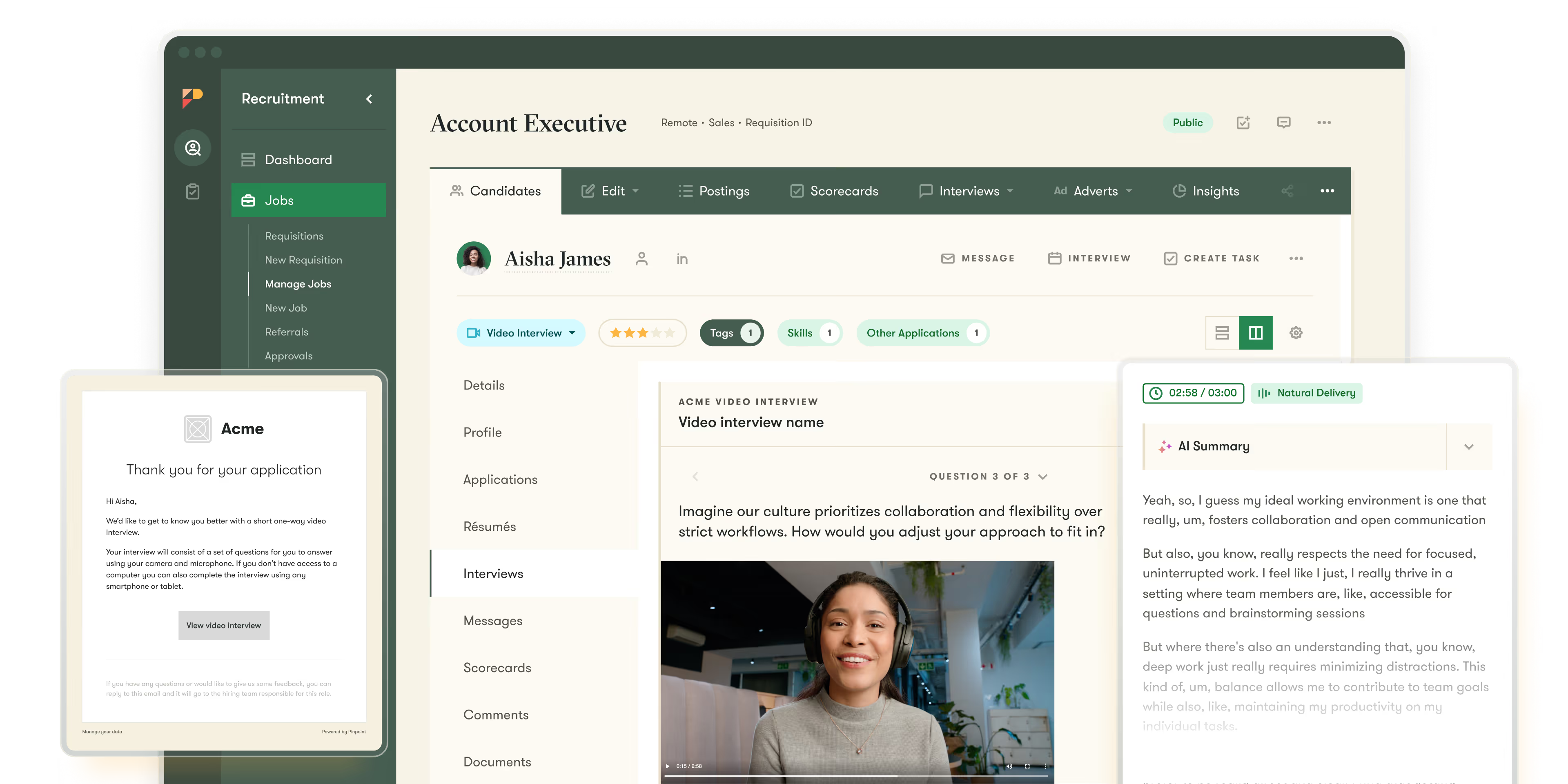

Remove the need to schedule early-stage interviews. Let candidates record responses on their own time, so more people can properly present themselves, not just those who fit your calendar. Your team reviews when it suits them, increasing the chances of uncovering standout talent.

Every candidate answers the same set of structured questions, creating a consistent and fair screening process. Your team evaluates candidates on the same criteria, rather than relying on different interview styles or availability.

See how candidates communicate, present themselves, and respond to questions before committing to a live interview. It’s a clearer signal for customer-facing and people-focused roles than resumés or application forms alone.

Give hiring managers more than written notes. Video responses, transcripts, and feedback all live on the candidate profile, so decisions can be made faster with richer, more human context.
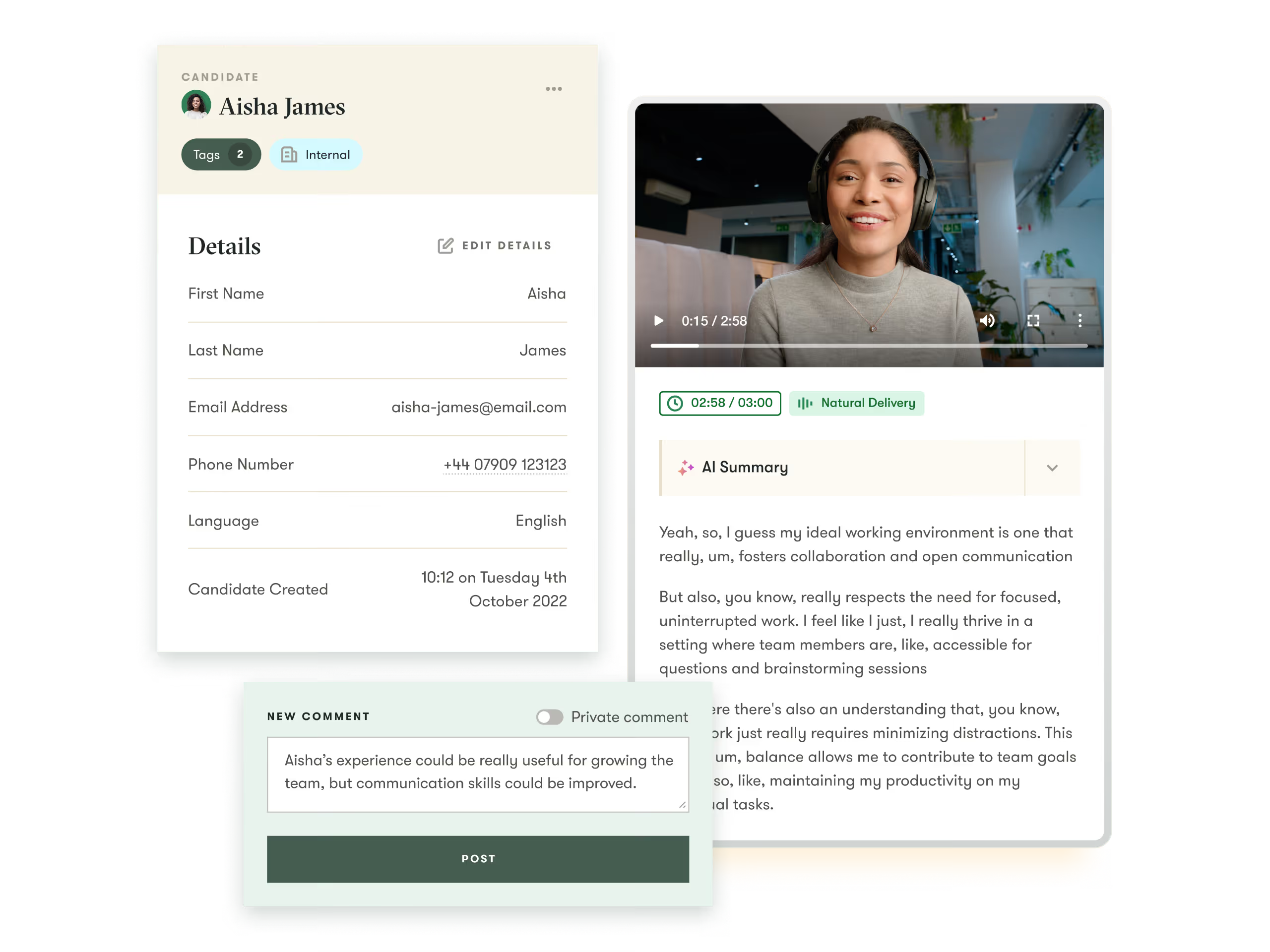
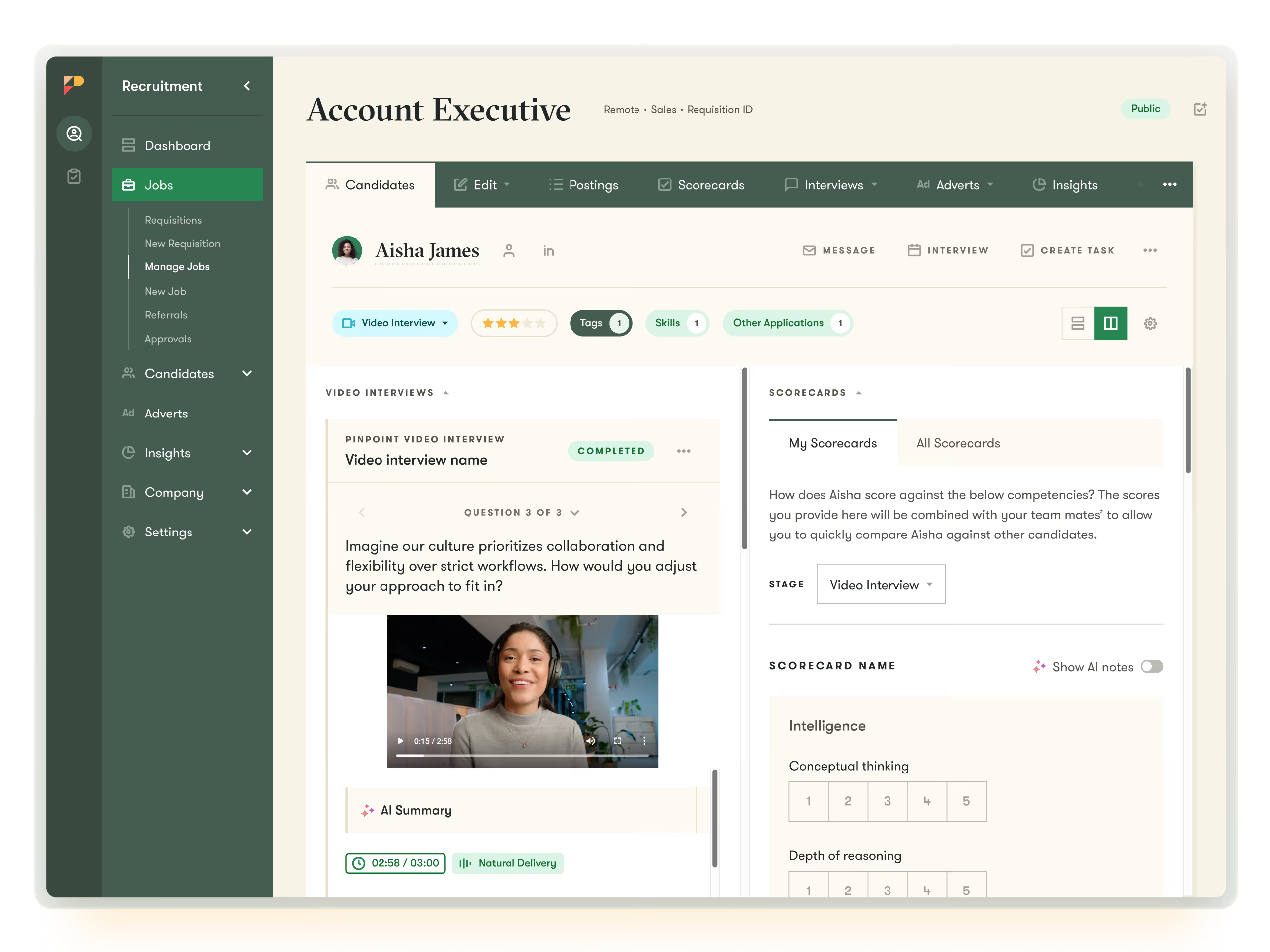
Video interviews, feedback, and decisions all happen inside Pinpoint. No separate tools, no switching between systems, and no disconnected candidate data.












































reduction in time to hire
casting day coordination
candidate communication

candidate engagement
candidate trust
reliance on paid ads

risk of candidates stalling
visibility for TA leaders and stakeholders
employees supported in the states
visibility on all candidates
locations supported
hiring manager adoption


A one-way video interview, also known as an asynchronous video interview, is a structured interview format where candidates record answers to predefined questions on their own time. Unlike live interviews, there is no scheduling required. Candidates receive a set of questions, record their responses, and submit them for the hiring team to review later.
This format allows recruiters and hiring managers to assess more candidates efficiently, while still getting insight into communication skills, confidence, and role fit beyond what a resumé can show.
One-way video interviews help teams screen more candidates in less time, and remove the overhead of scheduling in-person interviews.
For many teams, one of the biggest benefits is earlier signal. Instead of relying on resumés alone, recruiters can assess communication, clarity of thought, and customer-facing skills before deciding who to move forward. This leads to stronger shortlists and faster decisions.
Live video interviews require both the candidate and interviewer to be present at the same time, similar to a Zoom or Teams call. One-way video interviews are completed independently by the candidate, with no scheduling required.
This makes one-way interviews much more scalable for early-stage screening, especially in high-volume hiring. Live interviews are typically used later in the process, once a smaller group of candidates has been shortlisted.
When implemented well, one-way video interviews can create a more consistent and fair screening process. Every candidate receives the same questions and has the same opportunity to respond, which reduces variation between interviewers.
They also give candidates flexibility, allowing them to complete the interview at a time that works for them, without needing to take time off work. Clear instructions, reasonable time limits, and optional retakes can further improve the experience.
In an ATS like Pinpoint, one-way video interviews are built directly into the hiring workflow. Recruiters add a video interview stage, configure the questions and settings, and invite candidates to complete the interview.
Once submitted, video responses, transcripts, and feedback are stored in the candidate profile. Hiring managers can review responses, leave comments, and score candidates without needing to use a separate system.
One-way video interviews are most effective at the early screening stage, before live interviews are scheduled. They are particularly useful for high-volume roles, early-career hiring, and customer-facing positions where communication skills are important.
Using them early helps teams reduce the number of live interviews needed, while still identifying strong candidates quickly.
Yes. In Pinpoint, you can define different questions, response time limits, and retake settings for each role or workflow stage. This allows you to tailor the interview to the specific requirements of the job.
For example, a customer support role might focus on communication scenarios, while a technical role might include problem-solving questions. This flexibility ensures the interview is relevant and useful for decision-making.
Hiring managers can review video responses directly within the Pinpoint candidate profile. They can watch recordings, read transcripts, leave comments, and complete scorecards in the same place.
This makes it easier to share feedback, compare candidates, and make decisions without relying on separate tools or disconnected notes.
No. One-way video interviews are designed to support early-stage screening, not replace later-stage interviews, and Pinpoint supports both.
One-way inerviews help teams narrow down a large pool of applicants and identify the strongest candidates more efficiently. Live interviews are still important for deeper evaluation, relationship building, and final decision-making.