


What makes a great retail ATS? A 2026 buyer’s guide for retail hiring teams
Retail hiring is getting harder, and a general-purpose ATS often isn't built for the way your team needs to work.

Article
5 min
December 12, 2025
Retail hiring is getting harder, and a general-purpose ATS often isn't built for the way your team needs to work.

In 2025, retail talent acquisition teams met only 49% of their hiring goals. Filling roles now takes more coordination, clearer workflows, and better support for store managers than most general-purpose ATS platforms can offer.
The system you use shapes how quickly you can hire, how much administrative work your team carries, and how consistent the experience feels for candidates and hiring managers. In retail, where volume and pace matter, those differences add up fast.
This guide breaks down what makes a great retail applicant tracking system, and how to evaluate the best ATS for retail hiring teams in 2026, so you can choose a platform that supports how you actually hire.
Retail hiring brings together scale, speed, and collaboration in ways that few other industries do.
You’re hiring across stores, regions, and roles, often at volume, and store managers are closely involved at every stage. When hiring systems aren’t built for that reality, processes slow down, handoffs break, and recruiters end up filling the gaps manually.
In retail, your ATS needs to support fast movement through large applicant pools, flexible workflows across locations, and simple actions for hiring managers. Candidates also expect clear, timely communication, often on mobile, and delays quickly lead to drop-off. When those expectations aren’t met, teams lose momentum and spend more time chasing updates.
A retail-focused ATS gives you the structure and visibility to keep hiring consistent and efficient across the business. It supports the pace of retail hiring while reducing admin for recruiters and making it easier for managers and candidates to stay engaged.
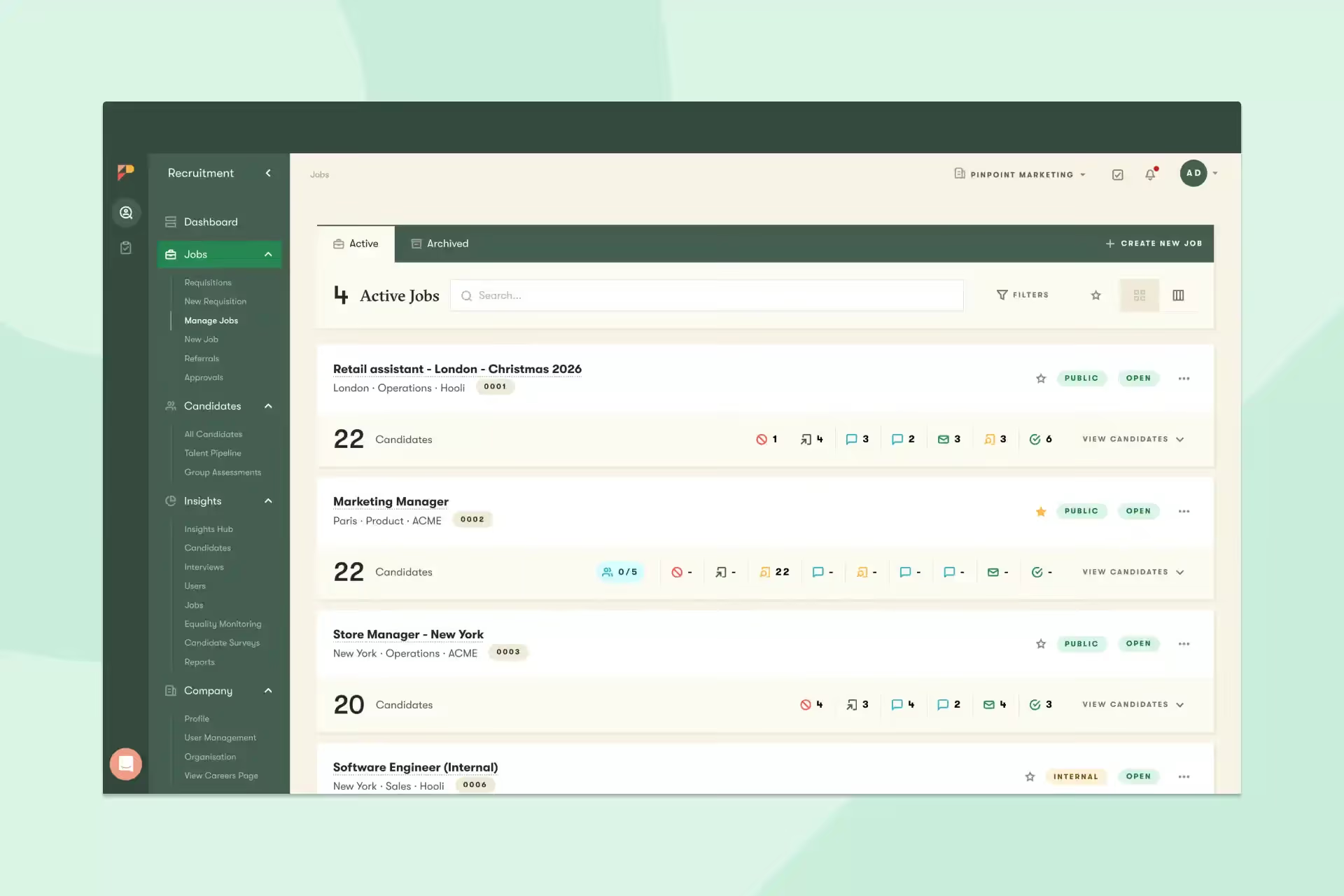
You’re working in an environment that keeps shifting, and every change affects how you attract, engage, and hire talent.
The challenges below shape what you need from your retail ATS, and influence the features and workflows that will support your team in 2026 and beyond.
Seasonal hiring means recruiting large numbers of people within short timelines, and many of those hires are new or returning staff. The holiday season comes around every year, so the challenge is the amount of coordination required, not the swings in demand. A retail ATS helps you organize previous applicants, re-engage past seasonal workers, and move quickly when hiring ramps up.
Many retail TA teams are expected to support large hiring volumes with lean internal resources. Rising labor costs increase pressure on your team to work efficiently, and repetitive manual tasks make that harder. Your retail ATS needs to reduce admin, streamline communication, and support consistent hiring across stores without adding extra work.
More than 53% of retail TA leaders say their time-to-hire increased in 2025, which puts more strain on already busy teams. High-volume roles are the first to feel the impact of delays. A retail-ready ATS helps you streamline reviews and keep candidates engaged from the moment they apply.
Automation is becoming essential for reducing manual work and supporting store managers who are operating under intense time pressure. When tasks like screening, communication, and scheduling run in the background, you gain more time for strategic hiring. A capable retail ATS gives you automation that feels intuitive and strengthens your workflow rather than complicating it.
Part-time and student labor has become less reliable in some markets, which means you’re hiring more long-term, full-time employees. That shift requires stronger screening tools and a smooth onboarding experience. A modern retail ATS supports that entire lifecycle.
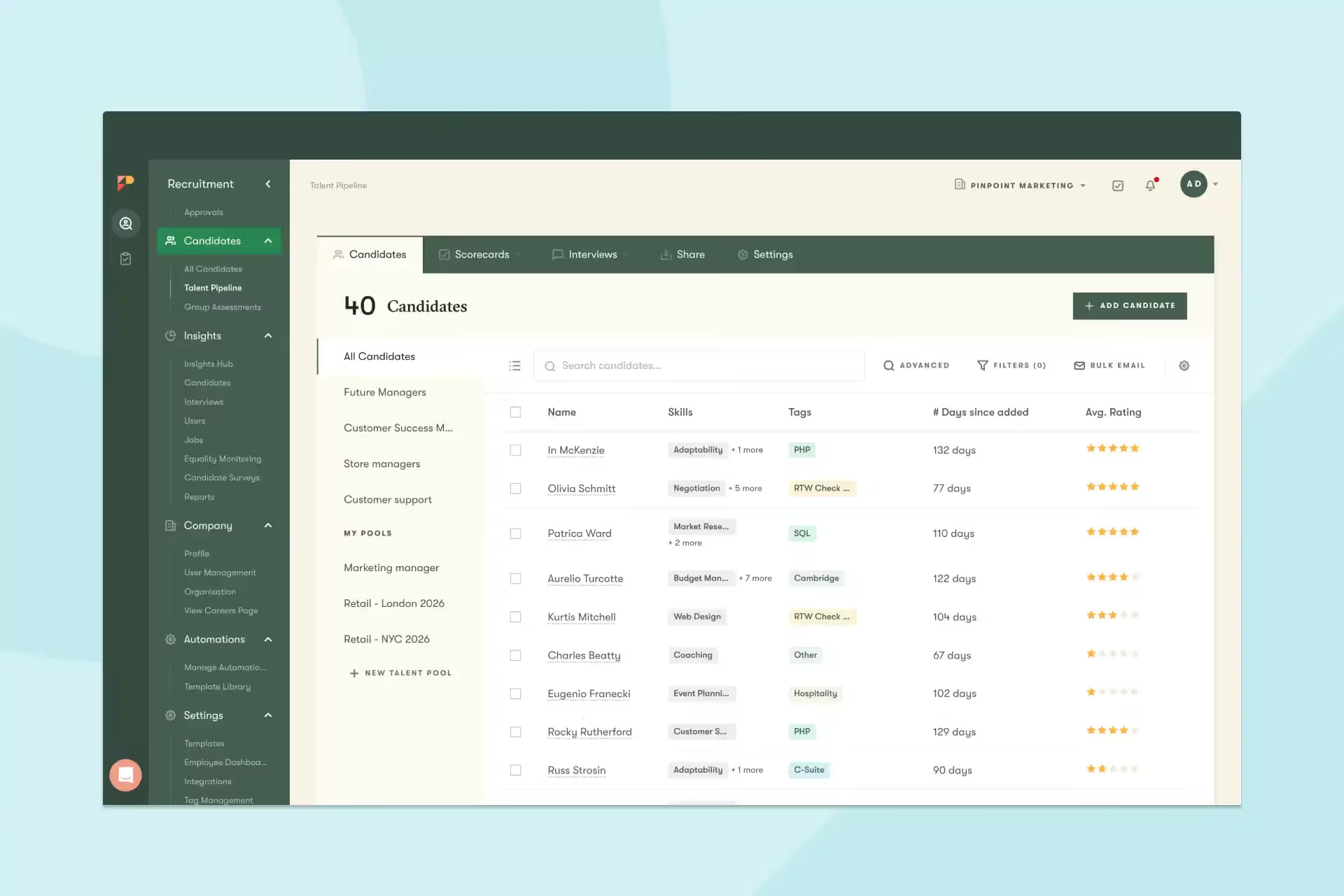
Choosing an ATS for retail hiring means looking beyond standard features and focusing on what actually supports your team’s day-to-day reality.
The essentials below reflect the capabilities that help you move quickly, stay organized, and create a consistent experience for candidates and store managers across every location.
You’re often managing large applicant volumes, especially for frontline and hourly roles. Your retail ATS needs to help you filter quickly, manage repeat applicants, and keep every stage of the process moving without creating more work for your team.
Most retail candidates apply on their phones, so your retail ATS should support a simple, mobile-friendly application flow. When the experience feels fast and intuitive, you reduce drop-off and keep more qualified people engaged.
Retail organizations rarely follow a single hiring process. Your retail ATS must support variations across stores, regions, and roles while still giving you visibility and consistency. Flexibility should never come at the expense of control.
Store managers play a critical role in hiring, and they need tools that fit into the rhythm of their day. A great retail ATS gives them clear tasks, quick access to candidate information, and straightforward ways to move people forward.
Automation is essential when you’re balancing high-volume demand with limited time. Your retail ATS should handle repetitive tasks like screening, messaging, and scheduling so you can focus on higher-impact decisions.
Retail relies heavily on returning candidates and past applicants who already know the brand. Your retail ATS should make it easy to organize those candidates, re-engage them, and surface strong matches when new roles open.
💡 Read our full guide on How to build a talent pool for seasonal hiring
You need predictable, structured hiring steps that keep everyone aligned, whether you’re supporting two stores or two hundred. A retail-ready ATS helps you maintain consistency without slowing you down.
Once you’ve made the hire, onboarding sets the tone for a new employee’s experience. The right ATS supports smooth handoffs and an onboarding flow that’s easy for both managers and new hires to follow.
You need insight into bottlenecks, volume trends, and hiring activity across every location. An ATS should give you clear, customizable views that help you forecast demand and share results with business leaders.
Your ATS sits at the center of your hiring process, but it shouldn’t operate in isolation. Strong integrations with HR, payroll, scheduling, and communication tools help you reduce duplication and keep data accurate.
When you’re managing high volumes, multiple locations, and tight timelines, the value of AI comes from how well it supports your workflow rather than how advanced it sounds on paper.
In a retail ATS, AI works best when it helps you reduce noise and focus on what matters. That can mean highlighting candidates who meet your key requirements, surfacing strong past applicants when new roles open, or helping you spot bottlenecks before they slow hiring down. Used well, AI supports better prioritization without taking control away from you or your hiring managers.
AI can also improve consistency. When screening, scoring, and communication follow clear patterns, you reduce bias, speed up decisions, and create a more predictable experience across stores and regions. That matters when different managers are involved at different stages of the process.
The most effective retail ATS platforms use AI quietly and intentionally. They help you move faster, stay organized, and make informed decisions, all while keeping people firmly in charge of hiring outcomes.
When you’re comparing ATS platforms, feature lists alone won’t tell you whether a tool will actually work for your team.
The checklist below focuses on how well a system supports the realities of retail hiring, from volume and speed to collaboration and consistency.
Look for fast screening tools, bulk actions, and workflows that help you efficiently manage and move large numbers of candidates.
Applications should be quick to complete on a phone, with clear communication and minimal friction at every step.
Hiring managers should be able to review candidates, schedule interviews, and give feedback without constant support.
You should be able to tailor hiring steps for stores, regions, and head office roles while maintaining overall consistency.
Prioritize systems that automate screening, scheduling, and communication so your team can focus on decision-making.
Strong talent pools, easy re-engagement, and visibility into past applicants are essential for retail hiring cycles.
A smooth handoff from offer to onboarding helps reduce drop-off and sets new hires up for success.
Reporting should give you clear insight into time-to-hire, bottlenecks, and hiring activity by store or region.
Your ATS should connect easily with HR, payroll, scheduling, and communication systems.
Look beyond the software. Strong onboarding, training, and ongoing support make a real difference to adoption and long-term success.
When retail teams struggle with their ATS, it’s rarely because the platform lacks features. More often, it’s because the system wasn’t designed for how retail hiring actually works.
Teams that choose tools built for corporate, office-based hiring often find themselves compensating with manual processes once volume increases and store managers get involved. Adoption drops, visibility suffers, and recruiters spend more time chasing updates than moving candidates forward.
The same pattern also shows up with candidate experience. When applications feel slow or communication breaks down, drop-off rises quickly, especially for frontline roles. Teams that prioritize simplicity and speed tend to see more consistent outcomes.
And finally, implementation is another turning point. Platforms that look good in demos can fail without the right rollout and support. Retail teams that succeed treat ATS selection as a long-term partnership, not a software purchase.
In short, if your ATS isn’t prepared for high-volume hiring, you can end up worse off than where you started. The strongest retail ATS decisions focus less on feature count and more on fitting your needs.
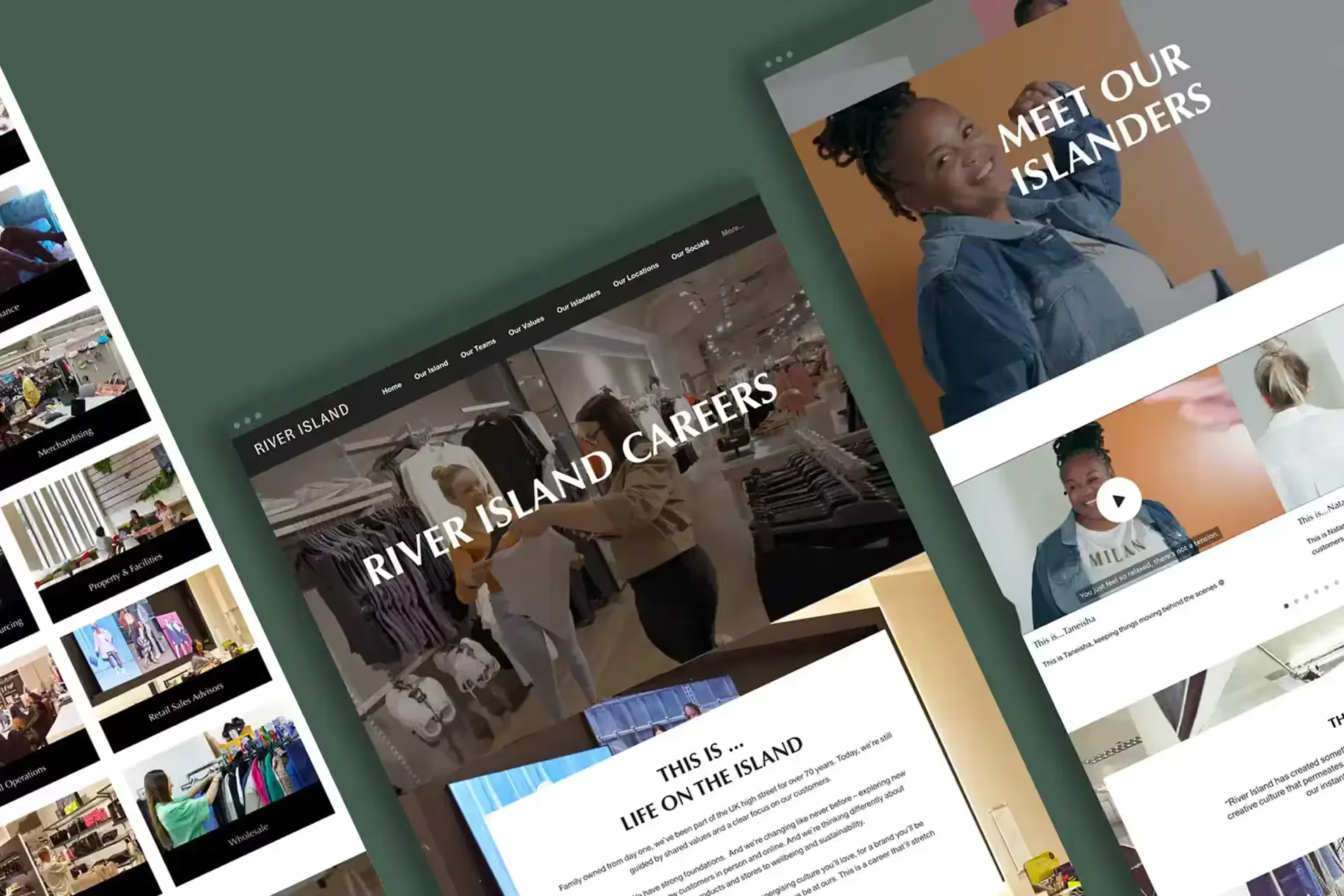
“Pinpoint has brought a whole new level of efficiency to the team. Nothing’s getting missed. No candidates are being left to wait.”
Hannah Clarke
Talent Acquisition Manager, River Island
River Island hires at scale across more than 240 locations, which made visibility, collaboration, and speed critical for their talent team. Their previous ATS relied on manual work and made it hard for recruiters and store managers to stay aligned.
By moving to Pinpoint, River Island introduced a more flexible hiring process, improved the candidate experience, and gave hiring managers clear insight into every stage of hiring. Automation andtailored workflows helped the team stay efficient during high-volume and seasonal hiring, leading to a huge 28% reduction in time-to-hire.
💡 Interested in learning more? Read the full River Island case study
As hiring teams continue to operate at scale with limited resources, the value of the right ATS becomes clearer. The strongest platforms help you stay organized, adapt to changing demand, and make better decisions at every stage of the process.
If you’re evaluating your next retail ATS, focus on a system built around these principles and designed to support high-volume, multi-location hiring as it works today.
Curious how a retail ATS can support your hiring? See how Pinpoint works for retail teams.
With over seven years in B2B SaaS, Alice creates data-driven content that makes complex topics simple and engaging. She believes every good story (no matter how dry or technical) should feel human, useful, and built on insight.