


What is high-volume hiring? A practical guide for hiring at scale
High-volume hiring is one of the most demanding things a recruiting team can take on. Here's what it actually involves.

Article
6 min
January 16, 2026
High-volume hiring is one of the most demanding things a recruiting team can take on. Here's what it actually involves.

Maybe your business routinely experiences a major seasonal spike. Or perhaps you’re opening a brand new warehouse that you need to staff. In either scenario (and so many more), you’ll be high-volume hiring.
What is high-volume hiring? It’s the process of recruiting, evaluating, and hiring a large number of candidates in a relatively short period of time.
Put simply, it’s all about hiring at scale. Instead of focusing on a handful of deeply customized candidate journeys the way you do for one-off hires, high-volume hiring uses standardized roles and repeatable workflows to prioritize speed without sacrificing quality.
High-volume hiring is most likely to pop up in industries where roles are repeated (like call centers or warehouse operations), demand fluctuates (like retailers during the holidays), or turnover is expected (like hospitality or food service).
However, it’s not exclusive to those fields; recent research indicates that 75% of companies across industries have either already used or plan to be high-volume hiring.
If you need to bring on a lot of new people as efficiently as possible, this guide has what you need to know to build a high-volume hiring process that can handle a large applicant pool (without causing large amounts of stress).
Here’s the easiest way to boil down the high-volume hiring meaning: making a lot of hires in little time. But exactly what “a lot” of hires looks like will vary across organizations; there’s no fixed number that officially defines this approach.
Hiring 10 people might seem like a massive undertaking for a 50-person company, while a global enterprise won’t bat an eye at hiring hundreds of workers in the same timeframe.
Context matters more than raw headcount, as several different factors shape high-volume hiring:
High-volume hiring doesn’t mean pressing “fast forward” on your typical recruiting and hiring processes. It requires a different approach — and, often, far more intentional systems, specific high-volume hiring tools, and plenty of coordination — to keep things moving speedily and smoothly.
High-volume hiring and traditional recruitment share the same goal: finding the right people for the right roles. But when you amp up your hiring needs and the time pressure you’re under, the process for getting there looks a lot different.
Here are a few of the biggest differences you’ll see day-to-day:
Ultimately, the difference in high-volume recruitment comes down to scale and pressure. Traditional hiring allows some wiggle room for customization and unexpected hiccups, while high-volume hiring demands structure, speed, and tight coordination to keep everything moving.
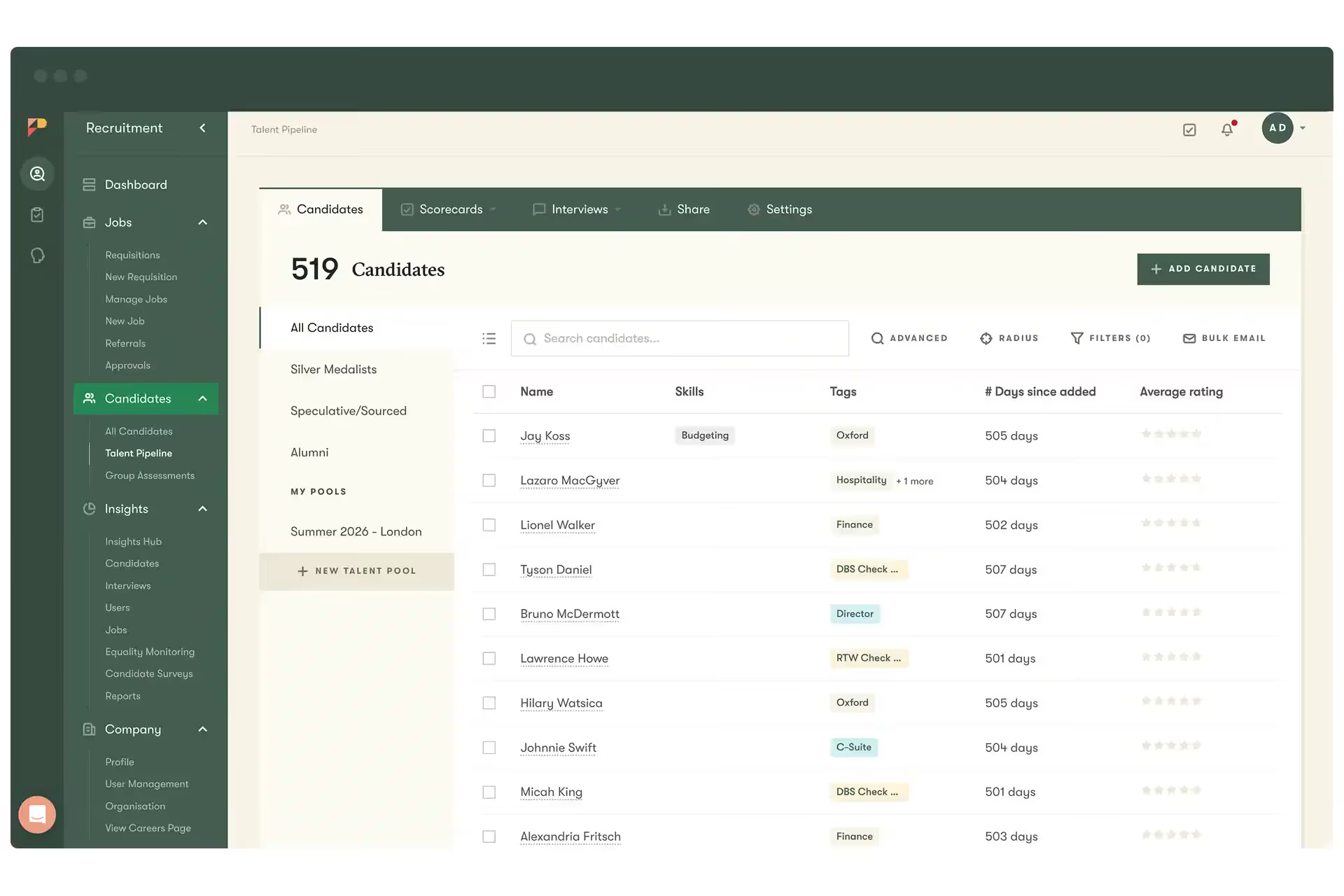
This type of hiring is more than high-volume — it can also be high stress. As your application numbers climb and tight deadlines loom, even the most well-run recruiting teams can start to feel the strain.
In those cases, it’s tempting to point the finger. However, many of the most common high-volume hiring challenges relate to your processes (and not your people).
With hundreds or thousands of applicants stacking up all at once, it’s tough to keep up. Recruiters might struggle to review applications quickly, identify qualified candidates, and avoid feeling overwhelmed by the sheer volume coming in. It’s one of the many reasons why choosing the right ATS is so crucial.
Particularly as volume increases, screening can quickly become a bottleneck. Limited recruiter time, overstuffed inboxes, or slow feedback from hiring managers can keep applications stuck early in the funnel. This pushes out your timeline and increases stress across the team.
High-volume hiring moves fast, but so do candidates. In fact, 48% of candidates say waiting to hear back from an employer is “highly frustrating.” It’s high-risk too. When responses or next steps take too long, candidates might lose interest or accept an offer elsewhere. What feels like an inconsequential delay internally could be the difference in landing that applicant or missing out.
Hiring at scale usually involves multiple recruiters, hiring managers, and teams working together. If you aren’t aligned on clear criteria and shared expectations, standards can shift and lead to uneven quality, confusion, and perceptions of unfairness in your hiring process.
Burnout is a common concern among hiring professionals, and high volume inevitably turns up the heat. Recruiters and hiring managers are often pulled in multiple directions at once, with little to no breathing room between interviews, approvals, and their day-to-day responsibilities.
The good news is that these hurdles are avoidable (without pushing your people harder). The right process — one built with scale, speed, and consistency top of mind — makes high-volume hiring feel far more manageable.
“Across the board now, all of our candidates are getting a more similar experience, and the communication they’re getting is much stronger.”
Adam Barnes
UK&I Retailer at Lush
Seasonal retail hiring is one of the most common high-volume hiring examples, and it’s a challenge that Lush knows well. Every year, the global cosmetics retail brand needs to hire large numbers of seasonal staff across many locations, all within a short timeframe.
By using Pinpoint as its high-volume hiring ATS, Lush brought structure to a fast-moving process. Recruiters standardized how roles were advertised, how candidates were screened, and how decisions were made across stores, even as application numbers continued to climb.
But equally important to Lush was making sure the candidate experience remained a top priority. With clearer recruitment workflows, better visibility, and smoother collaboration, applicants benefited from a more consistent journey, even during peak hiring periods.
💡 Interested in learning more? Read the full Lush case study.
High-volume hiring is used whenever you need to bring on a lot of people in a short period. But, while the pressure is real, the stress often comes less from the volume itself and more from trying to manage it with the processes you built for one-off hiring.
Hiring at scale isn’t business as usual. It requires a more intentional approach that’s specifically built to handle a lot of candidates at the same time. With that clear and repeatable hiring flow, it’s easier to stay organized and achieve your ultimate goal: a lot of great hires, without a lot of stress.
Need help? See how Pinpoint supports high-volume hiring.
With over seven years in B2B SaaS, Alice creates data-driven content that makes complex topics simple and engaging. She believes every good story (no matter how dry or technical) should feel human, useful, and built on insight.